Acid House – The Sound That Started It
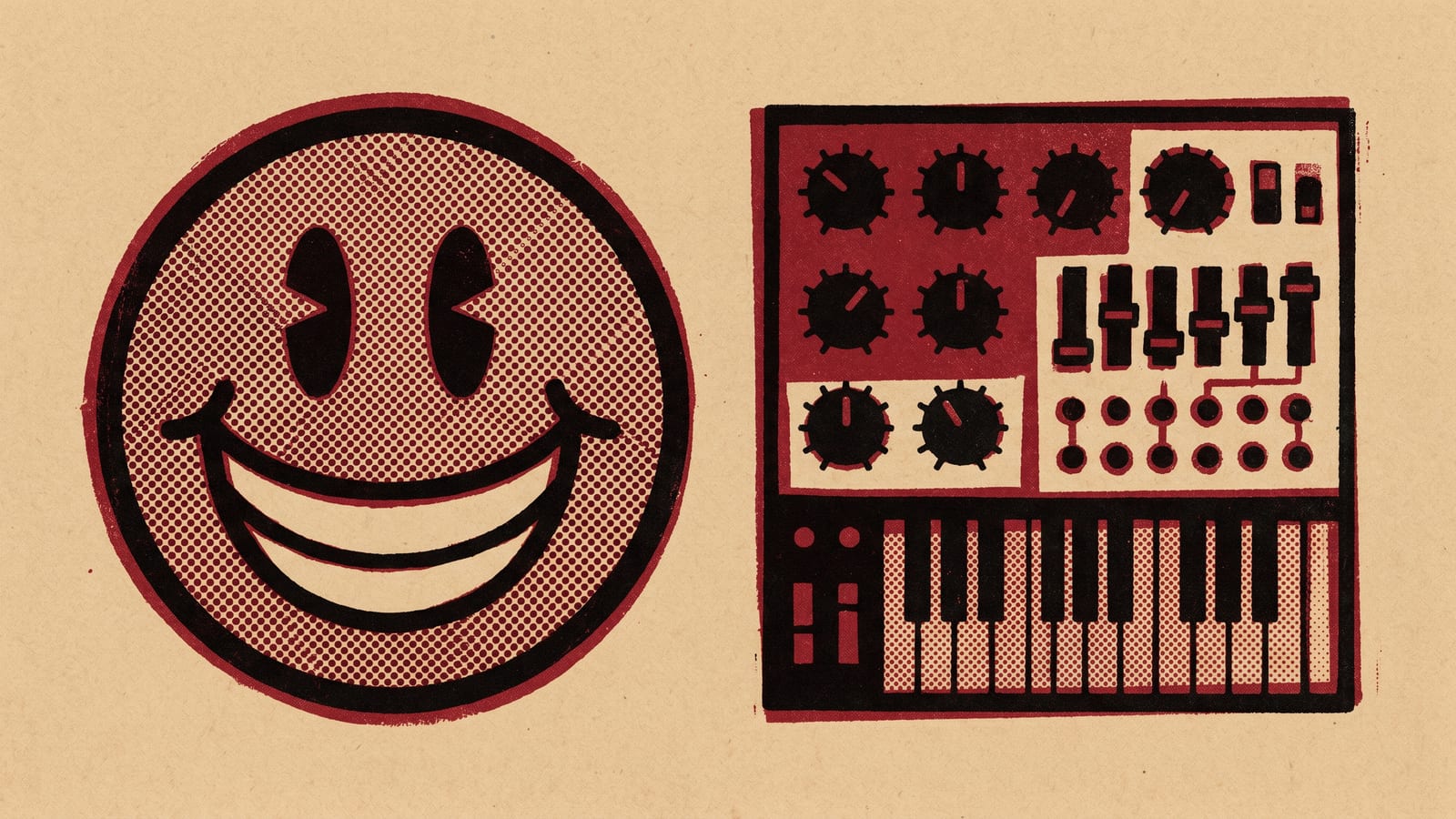
Acid house did not arrive fully formed. It was built on a production accident in Chicago, carried to Britain by a handful of DJs who had danced in Ibiza, and then turned into a full-blown social rupture in the summer of 1988. The music is inseparable from the moment, but the music came first.
Chicago, 1985: The Machine Nobody Wanted
The Roland TB-303 Bass Line was launched in 1982 as a practice tool for guitarists, a way to program a walking bassline and play along at home. It sold poorly, Roland discontinued it after about eighteen months, and second-hand units started appearing in Chicago pawn shops for next to nothing.
Three young Chicago musicians, DJ Pierre, Spanky and Herb J, performing together as Phuture, picked one up and started experimenting. They did not try to make it sound natural. They turned the resonance and cut-off controls to extremes, let the filter sweep and bubble and shriek, and produced something that sounded like nothing else on the market. The result was “Acid Tracks,” a twelve-minute instrumental released on Trax Records in 1987, widely considered the first acid house record. DJ Ron Hardy played it at the Muzic Box to confused, then increasingly ecstatic crowds.
The squelch was the point. It was synthetic in the most deliberate sense, not imitating a real bass but doing something a real bass physically cannot do. That quality, that controlled wrongness, became the genre’s signature.
The Ibiza Connection
The route from Chicago to London ran through the Balearics. In the summer of 1987, a group of British DJs including Danny Rampling, Paul Oakenfold, Johnny Walker and Nicky Holloway went to Ibiza and heard Argentinian DJ Alfredo playing Chicago house alongside other styles in a way that was looser and more euphoric than the strict club formats back home. They came back with records and, more importantly, with a sense of what a night could feel like.
Rampling opened Shoom in January 1988, a 300-capacity basement gym on Southwark Street in South London. Oakenfold launched Future and then Spectrum at Heaven. These were not large venues, but they were the pressure points from which something exploded outward.
The Smiley, the Flyers, the Summer
By the spring and summer of 1988 the scene had its own visual language. The smiley face, first attached to Shoom flyers around that January, became the emblem of the moment, cheerful and slightly unhinged, printed on T-shirts and daubed on walls. The “Second Summer of Love” label attached itself to 1988 retrospectively but captures something real: the sense that what was happening in London clubs and then in fields and disused warehouses was generational, that a lot of people were discovering the same thing at the same time.
The rave culture that grew from acid house took it outside licensed premises entirely. Orbital motorway parties, warehouse events organised through word of mouth and a phone number on a flyer, thousands of people on a Saturday night somewhere in the M25 corridor: all of that traces back to Shoom and Spectrum and the records coming out of Chicago.
What It Actually Sounded Like
The acid house track at its core is four-four kick drum, a hi-hat pattern, a sample or vocal stab, and then that 303 bassline running underneath everything, bending and sliding in a way that pulls at something in your chest. The tempo sat around 120 to 130 BPM, faster than the early Chicago house tracks that preceded it, and the emphasis was on the floor rather than the song structure. Verses and choruses were not the point. The build was the point.
Why It Matters
Acid house reorganised British youth culture. It broke down the geography of nightlife, pulling people away from city-centre venues into temporary spaces that could be anywhere. It created a new relationship between DJ and crowd, where the DJ was the architect of a continuous experience rather than an entertainer between acts. It made a largely working-class scene out of imported Black American music, the same pattern that produced punk and mod and ska before it.
The 303 squelch is still in use. House music never stopped; it just kept mutating. But 1988 is the year when the machine nobody wanted became the sound that changed everything.