Casuals – Football Terraces, Designer Sportswear, and the Last Great Cult
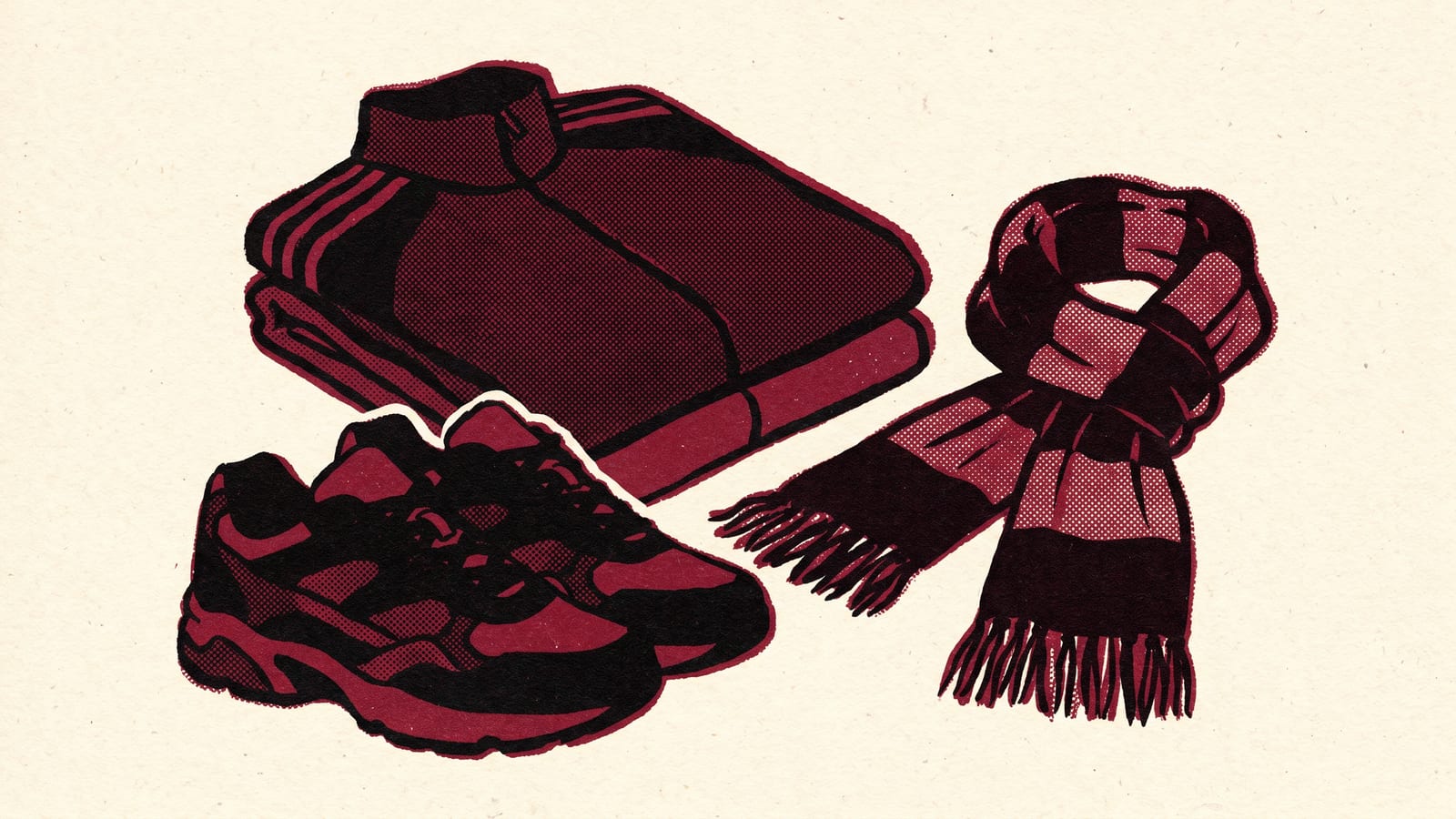
The casual is the British subculture that grew up on the football terraces at the end of the 1970s, built almost entirely around expensive European sportswear. No badges, no slogans, no obvious uniform to an outsider. The whole point was to look sharp, look expensive, and look like you were not trying. If the skinhead wore his class on his sleeve, the casual hid it behind a Sergio Tacchini tracksuit and a pair of trainers nobody else could get hold of.
Where it started
The casual scene is usually traced to Liverpool in the late 1970s. The accepted story is that fans following Liverpool and other clubs into European competition came back with continental sportswear and training shoes, obscure Adidas and Puma items, that simply were not on sale in Britain. Bringing back gear nobody at home had seen became a way of showing you had been there, and an arms race in hard-to-find labels followed from it.
Different cities developed their own names for the look before “casual” stuck. On Merseyside the early wearers were “scallies” or, after the Fred Perry shirts some favoured, “Perries.” Manchester had its own variants. By 1983, when the style magazine The Face finally ran a piece on it, the look had already spread across the country and split into competing regional styles centred on Liverpool, Manchester, and London.
The clothes
This is a subculture defined by its labels more than almost any other. The casual wardrobe of the early 1980s ran on continental tennis and ski brands worn off the court:
- Tracksuit tops by Sergio Tacchini, Fila, Ellesse, and Adidas, the rarer the better
- Knitwear like the diamond-pattern Pringle and Lyle and Scott golf jumpers
- Trainers that became almost a currency: Adidas Stan Smith, Forest Hills, and various retro three-stripe models, Diadora Borg Elite, Nike’s early imports
- Jeans and cords such as Lois, worn with the rest
- Later, as the look moved upmarket, Lacoste, Burberry, and Armani entered the picture
The detail that mattered was scarcity. Owning something nobody else could find was the whole game, and a top everyone had was already finished. Different firms came to favour different labels, and spotting where someone was from by their gear became part of the culture.
The haircut
The signature early casual haircut was the wedge, a longer, layered, side-swept cut borrowed loosely from contemporary fashion and a deliberate break from the cropped skinhead and shorter styles that came before. It read as softer and more affluent, which was exactly the point.
Football, firms, and the trouble
The casual scene cannot be cleanly separated from football hooliganism, and it would be dishonest to pretend otherwise. The look spread through the same networks as the organized fighting “firms” attached to clubs, and dressing well became tangled up with terrace rivalry and violence through the early-to-mid 1980s. Part of the practical appeal of dressing casual, rather than in club colours, was that it let fans travel and move without being instantly marked out by police or rival supporters.
That said, the casual is fundamentally a fashion subculture, and most of the people who dressed the part were there for the clothes and the belonging, not the aggro. The scene long outlasted the hooligan era it grew up alongside.
Legacy
The casual look fed directly into later British youth culture. It carried into the acid house and “Madchester” scene at the end of the 1980s, shaped the “lad” culture of the 1990s, and never really went away. A whole ecosystem of magazines, forums, and reissue labels keeps the original gear alive, and retro sportswear that once meant terrace credibility is now mainstream menswear.
The casual has a decent claim to being British youth culture’s last genuinely homegrown cult of the twentieth century, one built not on music, like most of the others, but purely on clothes.
Background drawn from Phil Thornton’s history of the movement, Casuals (Milo Books, 2003 / 2012).